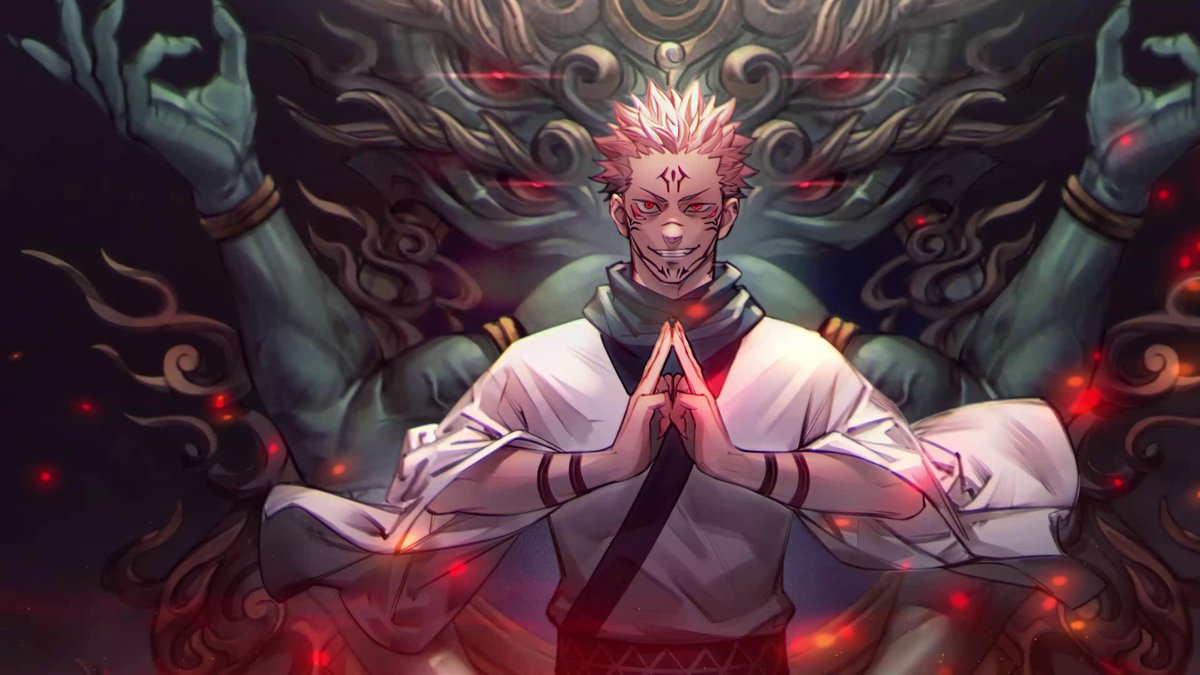
The convergence of ancient Japanese myth with the dark fantasy world of Overlord is an intriguing concept, often sparking curiosity among fans. While the formidable Ryomen Sukuna, a character of immense power and historical depth, is a central figure in Jujutsu Kaisen, it’s important to clarify upfront: Ryomen Sukuna does not appear as a character in the Overlord series. However, the very thought of such a powerful, ancient being within Nazarick is compelling.
This deep dive is for those who are captivated by Sukuna's mystique and want to understand the true origins and evolution of this iconic figure. We'll trace his path from ancient Japanese chronicles to modern pop culture, uncovering why he continues to fascinate and inspire comparisons across fictional universes.
The Mythical Foundations: Who is Ryomen Sukuna?
Our journey begins not in a virtual realm, but in the annals of Japanese history and folklore. Ryomen Sukuna first emerges from the pages of the Nihon Shoki, Japan's second-oldest chronicle, during the reign of Emperor Nintoku (around 290–399 CE). Here, he's painted as a fearsome bandit from the Hida Province (modern-day Gifu), a defiant force against imperial rule. His description is striking: a single torso with two faces looking in opposite directions, four arms wielding swords and bows, and four legs. This "Ryomen" (literally "Two Faces") portrayal has often been interpreted as the Yamato ethnic group's attempt to demonize their adversaries, possibly descendants of the Jomon people, or perhaps a poetic flourish to describe an exceptionally skilled warrior. To truly grasp how this early depiction set the stage for centuries of legend, we recommend .
From Villain to Hero: Sukuna's Evolving Narrative
While imperial records cast Sukuna as a rebel, regional tales offer a contrasting, more heroic perspective. In the Hida-Takayama and Mino areas, Sukuna is revered as a heroic leader of a powerful clan, bravely resisting Yamato aggression. Researchers even speculate that his eight limbs could be a historical memory of twin leaders, lending an almost superhuman quality to his presence. Local myths further embellish his legend, depicting him slaying a dragon or growing into a giant who planted over a thousand cypress trees, blending the fierce warrior with a benevolent mountain deity. This incredible transformation from antagonist to local hero is just one facet of .
The Buddhist Influence: A Sacred Transformation
With the advent of Buddhism in Japan during the sixth century, Sukuna's narrative took another surprising turn. Buddhist monks recognized a similarity between his multi-limbed form and that of the Bodhisattva Kannon, often depicted with eleven heads or a thousand arms. This serendipitous resemblance led to Sukuna's elevation to a semi-sacred figure, becoming a protector deity of Senkoji Temple in Hida-Takayama. Buddhist myths even tell of Sukuna emerging from a cave with the Lotus Sutra, performing various miracles. To understand this fascinating shift in his perception, consider .
Sukuna in the Modern Age: Pop Culture's Embrace
The 20th century saw new layers added to Sukuna's legend. During the Taisho era (1912–1926), a modern myth emerged about a two-headed Sukuna mummy, said to bring a curse upon its discoverers – a tale possibly inspired by the 1922 discovery of Tutankhamun's tomb. However, it is in contemporary media that Sukuna truly cemented his global notoriety. To see how these diverse tales coalesce into a modern phenomenon, don't miss [placeholder_link slug="placeholder_link slug="sukuna-modern-interpretations-pop-culture" text="discovering how Sukuna has been reimagined in modern pop culture"].
The King of Curses: Ryomen Sukuna in Jujutsu Kaisen
Perhaps the most recognized incarnation today is Ryomen Sukuna from the popular manga and anime series Jujutsu Kaisen. Here, he is reimagined as a fictional Heian-era demon, famously known as the "King of Curses." This portrayal draws clear inspiration from his ancient historical defiance against authority as depicted in the Nihon Shoki. The series also subtly incorporates Buddhist symbolism; Sukuna utilizes a specific Buddha Mudra (the Enma palm sign) for his Domain Expansion, "Malevolent Shrine," which itself evokes the imagery of the Tamamushi Shrine at Horyuji Temple in Nara. For an in-depth exploration of this terrifying yet captivating character, be sure to read .
Why the Overlord Connection?
While Sukuna may not be a denizen of Nazarick, it's easy to see why fans might imagine him there. His immense power, ancient origins, unique and intimidating appearance, and capacity for both malevolence and complex, regional heroism resonate with the type of legendary figures found within Overlord's rich world. If you're looking for characters within Overlord that embody a similar sense of ancient, overwhelming power or a mysterious, formidable presence, you might want to .
From his contested historical beginnings to his status as a curse-wielding demon, Sukuna's story is a testament to the enduring power of myth and its ability to adapt and thrill across millennia. His journey through time reminds us that some legends are simply too captivating to be confined to a single narrative.